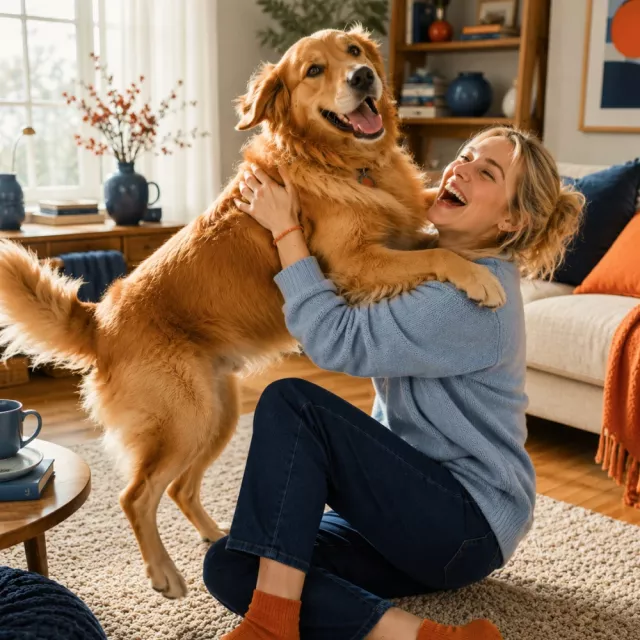
Every dog and cat has an individual way of responding to the world. One pet may eagerly investigate a new visitor, while another prefers to watch from a distance. Temperament offers a useful lens for noticing those differences and choosing care and training routines that respect them.
Our team encourages you to look for patterns rather than rush to conclusions. When you notice what helps your pet feel comfortable, you can make everyday interactions more predictable and rewarding for both of you.
What Temperament Can Tell You
Temperament describes an individual pattern of responses, such as how readily a pet approaches something unfamiliar or recovers after a surprise. It is not a fixed label or a reliable prediction of what your pet will do in every situation. A dog who enjoys meeting familiar people may still need space from a stranger, and a curious cat may be cautious in a noisy room.
Experience, surroundings, health, and context all influence behavior. A change in routine, an unfamiliar smell, pain, or a previous unpleasant encounter can affect a pet’s response. Age matters, too: a young animal learning about the world and an older animal managing physical changes may need different kinds of support.
Instead of deciding that your pet is simply “friendly” or “stubborn,” ask what is happening around them. Note when they choose to approach, move away, play, or rest. Those observations give you a starting point for adapting your routine.
Read the Whole Pet, Not Just One Signal
Body language is most useful when you consider posture, movement, facial expression, and the situation together. A pet’s behavior can change quickly, so keep watching rather than relying on a single moment. The signals below are possibilities, not definitive translations; no cue means the same thing in every context.
| Pet | Possible signal | What to consider | Helpful response |
|---|---|---|---|
| Dog | Turning away or moving back | The dog may want more distance | Pause and give the dog room |
| Dog | Loose body and relaxed movement | The dog may be comfortable in this setting | Continue calmly and watch for changes |
| Cat | Ears turned sideways or backward | The cat may be uneasy or overstimulated | Reduce pressure and allow an exit |
| Cat | Approaching with a relaxed body | The cat may be open to interaction | Let the cat set the pace |
If your pet appears uncomfortable, stop the interaction and make room for them to move away. Avoid holding them in place or insisting that they greet a person or animal. Giving them a choice can help you learn which situations need a gentler approach.
For more guidance on feline behavior, explore International Cat Care’s advice on understanding cats. Use your observations alongside professional advice when you are unsure what your pet needs.
Adjust Care and Training to Your Pet
A predictable routine can make daily life easier to navigate. Try to keep meals, walks, play, and quiet time reasonably consistent, while allowing for your pet’s changing needs. Provide a suitable retreat where your dog or cat can rest without being disturbed, and make sure they can leave social situations when they need a break.
Choose enrichment that suits the individual. A dog who enjoys sniffing may appreciate a leisurely walk with time to explore; a cat who likes to stalk may enjoy a short session with a wand toy. Watch for signs that the activity is enjoyable, and stop or adjust it if your pet moves away or seems tense.
Keep training sessions short and reward behaviors you want to encourage. Food, play, or another reward your pet enjoys can make practice worthwhile. Introduce new situations gradually, starting at a level where your pet can remain comfortable. If they hesitate or try to leave, increase the distance or make the situation easier rather than pushing them to continue.
The American Veterinary Society of Animal Behavior offers guidance on humane, reward-based dog training. For either species, sudden or persistent behavior changes warrant a veterinary check, since discomfort or illness may play a role. If safety or significant distress is a concern, ask your veterinarian for help finding a qualified behavior professional.
Explore Understanding Your Pet’s Temperament
For a resource focused on decoding dog and cat behavior for better care and training, explore Understanding Your Pet’s Temperament: A Complete Guide to Decoding Dog and Cat Behavior for Better Care and Training. It is listed at $39.99 USD and is in stock. Visit the product page for current purchase details.
Taking a calm pause can also help you pay attention during daily routines with your pet. For a separate personal resource, we offer the Meditations for Self-Love & Worthiness audio course. It is not a substitute for veterinary care or behavior support, but it may be of interest if you want to make time for your own mindfulness practice.
FAQ
Can a pet’s temperament change over time?
Yes. Behavior can change with age, experience, health, and environment, even when some individual tendencies remain recognizable.
How can I help a shy dog or cat feel more comfortable?
Provide a safe retreat and let your pet approach at their own pace. Reward voluntary engagement without forcing contact.
When should I ask for professional help with behavior?
Contact your veterinarian about sudden behavior changes or possible health concerns. Seek a qualified behavior professional when distress persists or safety is a concern.